


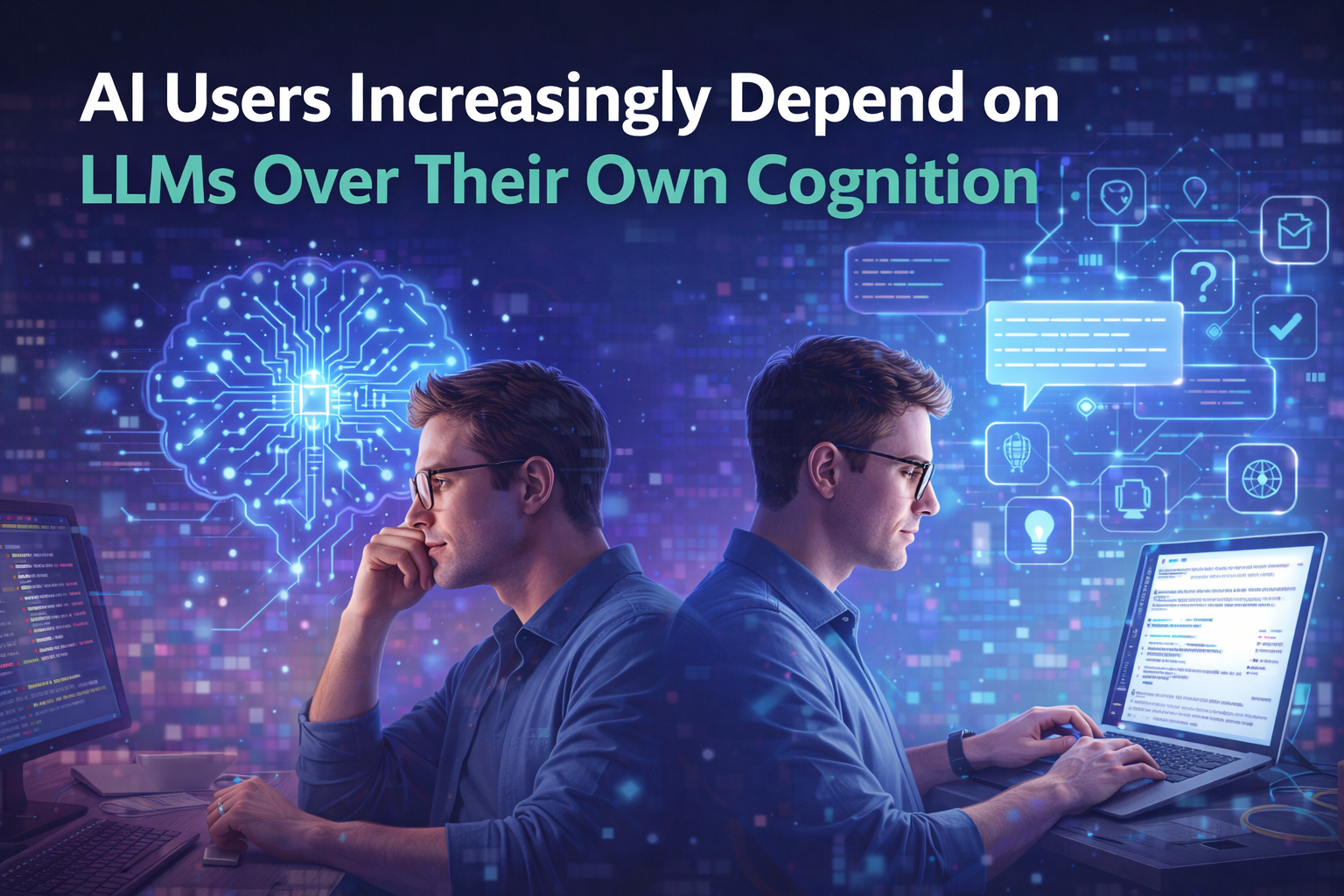
AI Users Increasingly Depend on LLMs Over Their Own Cognition
In today’s digital age, the evolution of Artificial Intelligence (AI) has profoundly impacted how individuals interact with information and make decisions. This phenomenon is particularly evident with the rise of Large Language Models (LLMs), which serve various roles, from writing assistance to creative brainstorming.
The Shift Towards AI Dependence
As more users embrace LLMs in their daily routines, a notable shift in cognitive reliance is becoming apparent. Many individuals are beginning to rely on these systems for tasks that were traditionally managed by human cognition alone.
Benefits Enabling Dependence
Several factors contribute to this increasing reliance on AI technology:
- Efficiency: LLMs can process and generate information swiftly, saving time for users in a fast-paced environment.
- 24/7 availability: Unlike human counterparts, LLMs are always accessible, ready to assist whenever needed.
- Information overload: With a plethora of information available online, LLMs help users navigate through it by simplifying complex data.
- Enhanced creativity: AI can provide new perspectives and ideas, aiding users in brainstorming and problem-solving tasks.
Implications for Human Cognition
While the benefits of using LLMs are undeniable, there are concerns regarding the potential effects on human cognition:
- Decreased critical thinking: As users become accustomed to relying on AI for answers, they may neglect to engage in analytical thinking.
- Learning stagnation: Frequent use of LLMs may hamper learning processes, as users may not retain information or develop problem-solving skills effectively.
- Over-dependence: Users may become overly reliant on LLMs, diminishing their confidence in personal judgment and decision-making abilities.
Striking a Balance
To harness the capabilities of LLMs while maintaining cognitive health, users should consider adopting a balanced approach:
- Use AI as a supplement: View LLMs as tools to enhance human intelligence rather than replacements for it.
- Engage in active learning: Regularly challenge oneself to learn new concepts without relying solely on AI support.
- Practice critical thinking: Continuously develop analytical skills by questioning AI-generated content and forming personal conclusions.
The Future of AI and Human Cognition
As society progresses, the integration of AI and LLMs into daily life raises important questions about the future of human cognition. Will reliance on AI limit our intellectual growth, or can it serve as a catalyst for enhancing our cognitive abilities?
It is crucial to navigate this landscape mindfully. By fostering an environment where AI complements human thought rather than replacing it, we can ensure that both may thrive together. As we move forward, users must embrace their intelligence while leveraging the remarkable advancements in technology.
Conclusion
In summary, while the increasing dependence on LLMs highlights their capabilities and benefits, it also prompts a need for self-awareness about our cognitive processes. By consciously engaging with AI tools and prioritizing personal growth, individuals can cultivate a harmonious relationship between human cognition and artificial intelligence.




Leave a Reply